The Australian Open, the first of the Grand Slams, begins on Sunday. This event combines top-level competition with a unique atmosphere. Although it is nicknamed the ‘Happy Slam’ due to its friendly atmosphere, the summer heat and fast courts make it a colossal challenge for players.
Here is some background information on this tournament, which captivates the tennis world.
From humble beginnings to the global ‘Happy Slam’
The Australian Open has a long history of steady growth, transforming it from a relatively obscure event into one of the four most important tournaments in tennis.
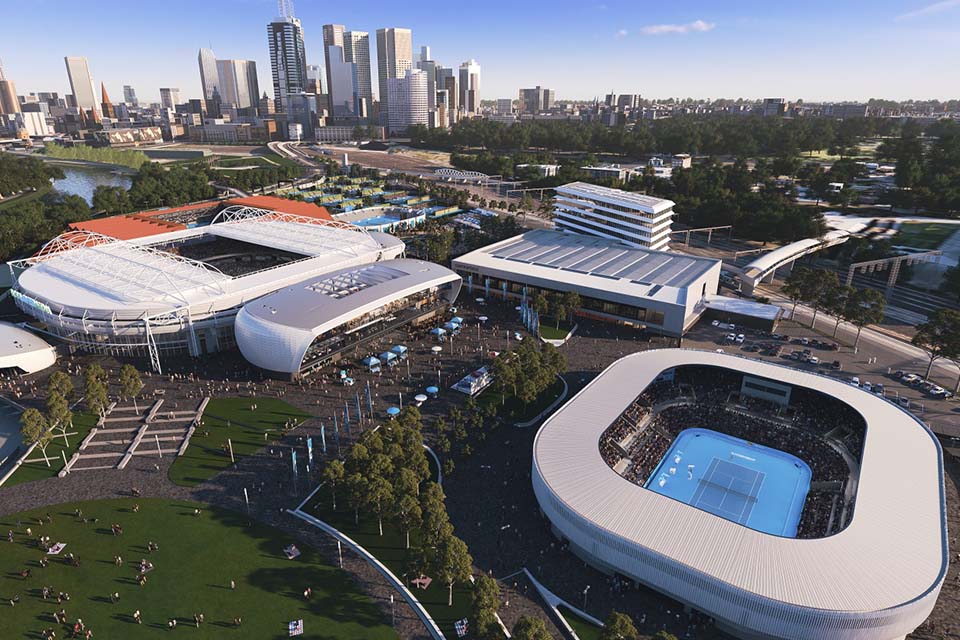
Founded in 1905 as the Australasian Championships, the tournament was long considered the least prestigious of the Grand Slams due to its geographical remoteness. After moving from city to city several times, it finally settled in Melbourne in 1972 and, more specifically, in Melbourne Park in 1988. This move, along with the switch from grass to hard courts (first Rebound Ace, then Plexicushion and now GreenSet), marked a turning point. The tournament was modernised and opened up to more international players, earning it the nickname ‘Happy Slam’ thanks to its welcoming organisation and festive atmosphere.
The Australian Open has witnessed historic performances, crowning tennis legends who have made their mark on the first Grand Slam of the year.
In the men’s competition, Novak Djokovic reigns supreme in Melbourne, holding the all-time record for singles titles with 10 victories. His dominance of this tournament is unparalleled, thanks to his all-round game which is perfectly suited to fast surfaces. Other notable players, such as Roger Federer (six titles) and Andre Agassi, have also excelled there. In the women’s competition, icons such as Serena Williams (seven titles) have defined the modern era with their power and determination, while Australian legends like Margaret Court (11 titles, most of which were won before the Open era) hold the all-time records. The Australian Open often serves as an early-season barometer.
The heat challenge
The Australian Open is renowned for its extreme playing conditions, which challenge players from the very beginning of the year.
Held in the middle of the Australian summer in January, the heat is a major factor, with temperatures often exceeding 40°C (104 °F). Players must demonstrate exceptional physical and mental endurance and stay constantly hydrated, sometimes even playing indoors to avoid the worst of the conditions. The hard courts, currently GreenSet, are known for being fast, which favours aggressive, powerful and precise play. While this benefits big servers and hitters, it also requires great mobility and sharp reflexes. Victory hinges on energy management and the ability to withstand the heat.
Interesting facts
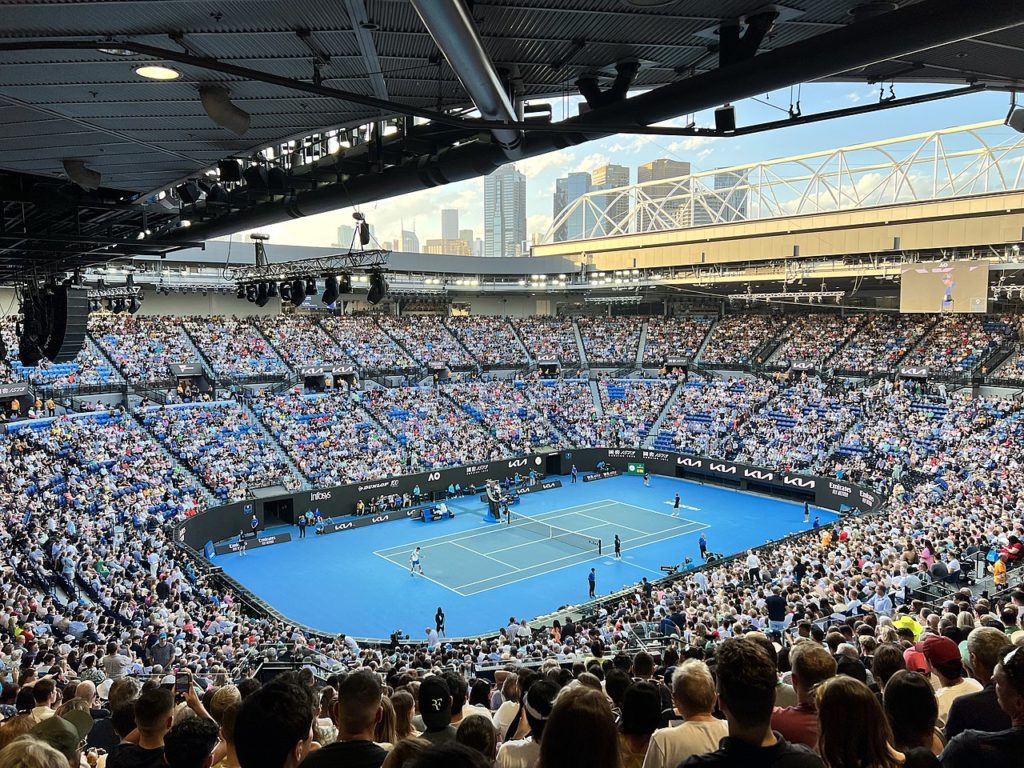
- Retractable roofs: In response to the city’s hot and rainy weather, Melbourne Park became the first venue to install retractable roofs on its main courts, enabling matches to continue regardless of the conditions.
- The longest Grand Slam final: In 2012, Novak Djokovic and Rafael Nadal competed in the men’s singles final for an incredible 5 hours and 53 minutes. The match ended at 01:37, with Djokovic achieving an astonishing five-set victory. Both players were so exhausted that they needed chairs for the trophy ceremony.
- The relaxed atmosphere: Despite what was at stake, the tournament retains a relaxed atmosphere that is much appreciated by players and spectators alike. With its highly accessible facilities and numerous festive events, it fully justifies its nickname of the ‘Happy Slam’.
- First Grand Slam to feature blue courts: In 2008, the tournament made a change by adopting a new surface called Plexicushion, which was intended to be slower than the previous surface. The Australian Open thus became the first Grand Slam to feature blue courts, a colour that has since become emblematic of the tournament.